
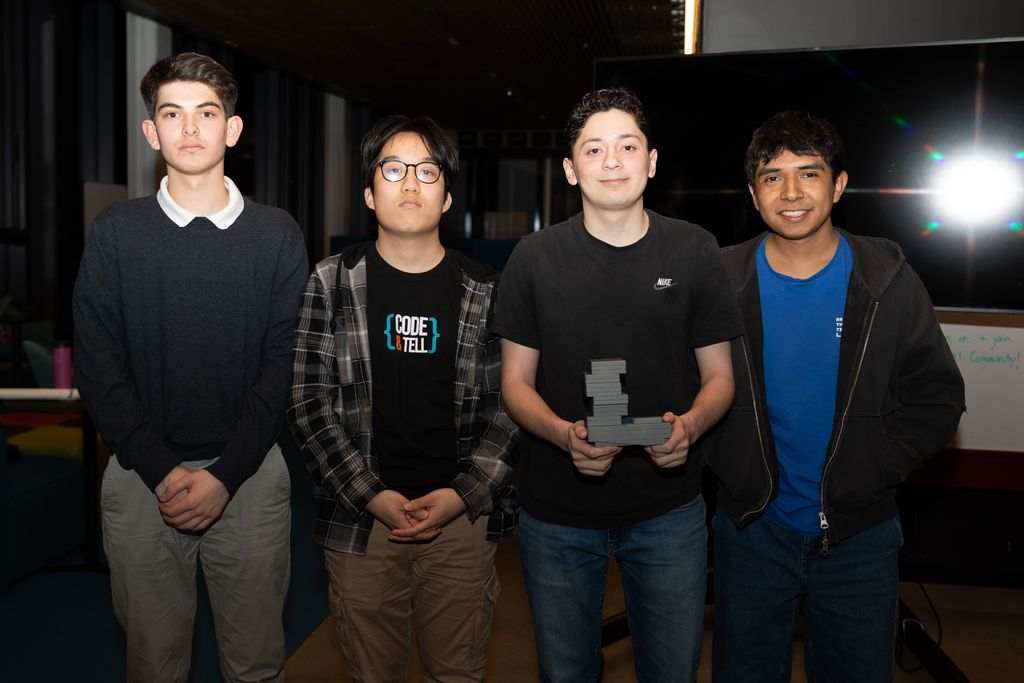
There is a table on the third floor of the library that the four of us kept ending up at. Different majors, different courses, same ritual: laptops open, a chatbot in one tab, slides in another, and a quiet feeling that we were getting worse at learning while looking more productive than ever.
The question that started Sapling was not "how do we use AI to study faster." It was uglier and more honest: why did handing in good work feel so different from actually knowing anything? One of us aced a problem set and then could not explain a single answer at that table two days later. The tools were doing the understanding, and we were doing the submitting.
The missteps
Our first build, over a hackathon weekend, was exactly what you would guess: a wrapper around a chat model with a nicer prompt. It answered questions about your course. It was also useless in the way that matters — it knew nothing about you, so it explained eigenvalues the same way on day one and day ninety, whether you were lost or bored.
The second attempt was a flashcard app with AI-generated cards. Better, but it had the same hole in the middle: it tracked what you had seen, not what you understood. A deck does not know that your trouble with recursion is really trouble with the call stack, one concept upstream.
The thing that finally felt right was embarrassingly simple to say out loud: model the course as a graph of concepts, watch how a student actually performs against each one, and let everything else — quizzes, review, tutoring — read and write that one shared map. Not a feature. The spine everything hangs off.
What Sapling became
Today you drop in your course materials — the syllabus, the slides, your notes — and Sapling builds that map. Every quiz answer, every flashcard rating, every tutoring exchange moves a mastery score on a real concept. The tutor asks before it tells, cites the slide it drew from, and never just hands over the solution. When you upload, your whole class benefits: one person’s lecture notes fill gaps in another’s slides.
We built it from our own frustration, for courses we were actually taking, and we tested every mechanic on ourselves first. Some of what we shipped came straight from getting it wrong — TeachBack exists because explaining things badly at that library table turned out to be the fastest way to find out what we did not know.
Where it goes from here
Sapling is in beta, free, and currently exclusive to Boston University students while we get the foundations right. The journal you are reading is where we will keep thinking in public — about the product, about what we are learning about learning, and about the missteps still to come. There will be some. That is rather the point.